
STACKS:
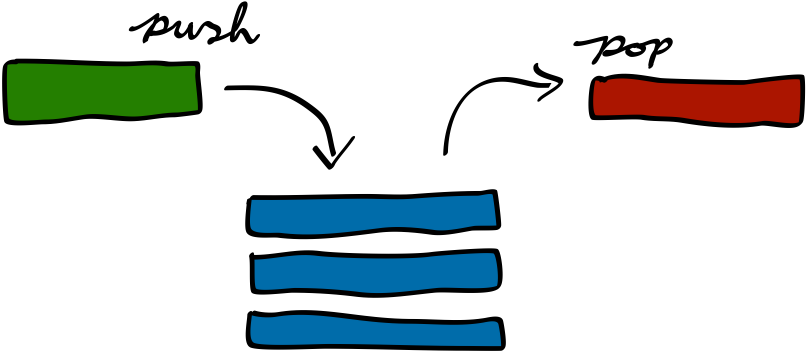
A stack is a datastructure which folows LIFO(last-in-first-out) concept. i.e. the last element pushed in the stack is the first one to pop out. For example if the last card we put on the deck of cards is an ace, then the first card we pulled from the tp is the same
import java.util.Scanner;
public class Stack {
Object arr[];
int size, top;
//CONSTRUCTOR//
Stack(int n) {
size=n;
top=-1;
arr=new Object[size];
}
//PUSH THE ELEMENT INTO STACK//
public void push(int n) {
top++;
if(top<size) {
arr[top]=n;
}
else
System.out.println("\nSTACK Is Full");
}
//POP THE ELEMENT FROM STACK//
public void pop() {
if(top>-1) {
top--;
System.out.println("\nDeleted Element: "+arr[top+1]);
}
else
System.out.println("\nEmpty Stack");
}
//DISPLAY THE ELEMENTS IN STACK//
public void disp() {
if(top>-1) {
for(int d=top; d>=0; d--) {
System.out.println("|"+arr[d]+"|");
}
}
else
System.out.println("\nEmpty Stack");
}
//DISPLAY THE PEEK ELEMENT//
public void peek() {
if(top>-1)
System.out.println("\nPeek Element: "+arr[top]);
else
System.out.println("\nEmpty Stack");
}
//DISPLAYS IF STACK IS EMPTY OR NOT//
public void isEmpty() {
if(top==-1)
System.out.println("\nEmpty");
else
System.out.println("\nNot Empty");
}
//main METHOD//
public static void main(String args[]) {
Scanner sc=new Scanner(System.in);
System.out.print("\nEnter Size of Array: ");
int n=sc.nextInt();
Stack stack=new Stack(n);
while(true) {
System.out.print("\n1. Push\n2. Pop\n3. Display\n4. Peek\n5. IsEmpty\nCHOICE: ");
int ch=sc.nextInt();
switch(ch) {
case 1:
System.out.print("Enter Number: ");
int num=sc.nextInt();
stack.push(num);
break;
case 2:
stack.pop();
break;
case 3:
stack.disp();
break;
case 4:
stack.peek();
break;
case 5:
stack.isEmpty();
break;
default:
System.exit(0);
}
}
}
}
A stack is a datastructure which folows LIFO(last-in-first-out) concept. i.e. the last element pushed in the stack is the first one to pop out. For example if the last card we put on the deck of cards is an ace, then the first card we pulled from the tp is the same
Sample Code (in Java) :
public class Stack {
Object arr[];
int size, top;
//CONSTRUCTOR//
Stack(int n) {
size=n;
top=-1;
arr=new Object[size];
}
//PUSH THE ELEMENT INTO STACK//
public void push(int n) {
top++;
if(top<size) {
arr[top]=n;
}
else
System.out.println("\nSTACK Is Full");
}
//POP THE ELEMENT FROM STACK//
public void pop() {
if(top>-1) {
top--;
System.out.println("\nDeleted Element: "+arr[top+1]);
}
else
System.out.println("\nEmpty Stack");
}
//DISPLAY THE ELEMENTS IN STACK//
public void disp() {
if(top>-1) {
for(int d=top; d>=0; d--) {
System.out.println("|"+arr[d]+"|");
}
}
else
System.out.println("\nEmpty Stack");
}
//DISPLAY THE PEEK ELEMENT//
public void peek() {
if(top>-1)
System.out.println("\nPeek Element: "+arr[top]);
else
System.out.println("\nEmpty Stack");
}
//DISPLAYS IF STACK IS EMPTY OR NOT//
public void isEmpty() {
if(top==-1)
System.out.println("\nEmpty");
else
System.out.println("\nNot Empty");
}
//main METHOD//
public static void main(String args[]) {
Scanner sc=new Scanner(System.in);
System.out.print("\nEnter Size of Array: ");
int n=sc.nextInt();
Stack stack=new Stack(n);
while(true) {
System.out.print("\n1. Push\n2. Pop\n3. Display\n4. Peek\n5. IsEmpty\nCHOICE: ");
int ch=sc.nextInt();
switch(ch) {
case 1:
System.out.print("Enter Number: ");
int num=sc.nextInt();
stack.push(num);
break;
case 2:
stack.pop();
break;
case 3:
stack.disp();
break;
case 4:
stack.peek();
break;
case 5:
stack.isEmpty();
break;
default:
System.exit(0);
}
}
}
}

No comments:
Post a Comment